
What Makes Bison Taste the Way It Does?
The Story Behind the FlavorHave you ever wondered why Bluestem Bison tastes the way it does? Lean. Clean. Slightly sweet. Delightfully satisfying. Delicious.
The flavor of bison meat isn't determined by one single thing. It reflects a combination of the animal, its diet, how it is raised, the way the meat is handled, and how it is prepared in the kitchen. Let's unpack four factors that help explain what shapes the flavor of grass-fed and grass-finished Bluestem Bison. 
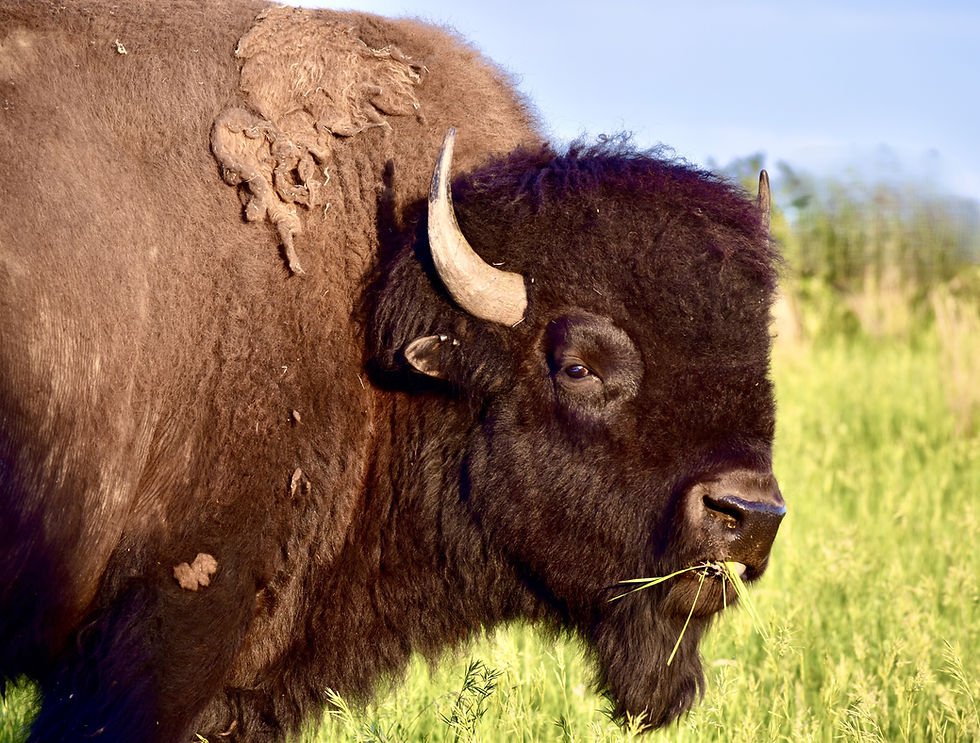
1. Diet: What Bison Eat MattersDiet is one of the factors that can influence meat flavor. The types of forage an animal consumes can affect the fatty acids and flavor compounds in its meat. Our bison graze on native prairie grasses, including big bluestem, little bluestem, blue grama, and buffalograss. The high nutrient density of these forages is directly impacted by the mineral rich soils of Northwest Kansas. By raising and finishing our bison on grass the meat reflects a slightly sweeter earthy flavor. This connection between diet and flavor is one reason the way an animal is raised matters when you're choosing bison meat.
2. The Animal: Every Bison Is DifferentNot every bison is exactly alike. Genetics, age, sex, and individual physiology can influence characteristics such as fat content, tenderness, and flavor. These natural differences are part of working with a real animal living completely in harmony with nature; rather than a mass produced standardized product. They also help explain why two steaks from different animals may not be identical, even when both are raised under the same management practices. 3. Environment: Life on the Prairie MattersThe animal's environment and handling are also part of the meat-quality story. Research on bison production has linked several handling factors with differences in meat quality. At Bluestem, our bison live out their lives grazing freely on native pasture, in harmony with nature, 365 days a year; very consistent to how their ancestors roamed and helped to maintain the prairie thousands of years ago. They are never confined, injected, or fed grains in feedlots. We believe responsible animal care and thoughtful management matter, not just for raising bison, but for the integrity of the food we produce.
4. The Harvest and ProcessingThe way bison are harvested matters. We field-harvest the animals on the native prairie where they live, rather than confining them and transporting them to an off-site harvest facility. This approach eliminates the stress of an adrenaline and cortisol spike associated with loading, hauling, and unfamiliar surroundings. Minimizing pre-harvest stress matters because the animal's physiological response to stress can negatively influence meat quality, including tenderness, color, and other characteristics that shape the eating experience.
For us, field harvest is an extension of our commitment to raising bison in their natural environment and handling them with care through the final stage of the process. It's one more way we connect the health of the prairie, the well-being of the animal, and the quality of the food we bring to your table. |
 |


Comments